
Social-Emotional Strategies
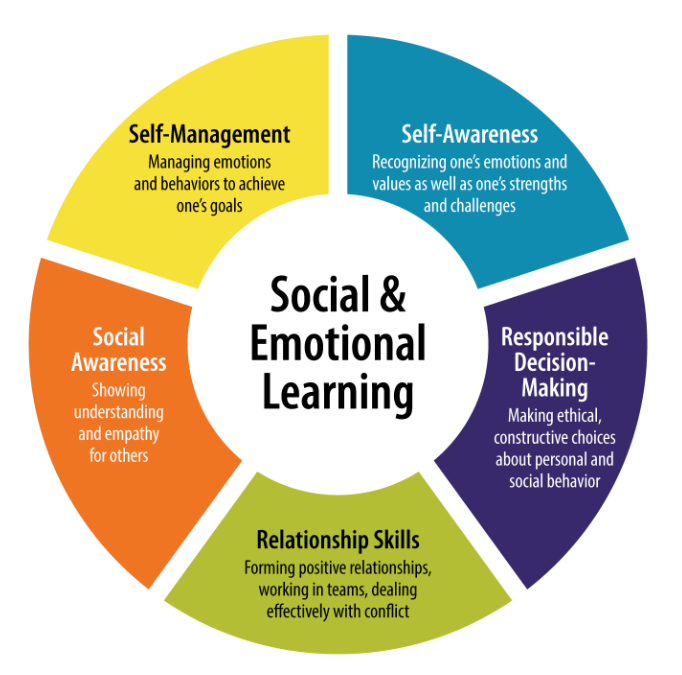
An educator can promote a safe, caring, and free learning environment by allowing regular routines, friendly interactions and nurturing space. When it comes to social competence it consist of four components, these would include learning related skills, compliance, interpersonal social skills, and group social interactions. These components could include paying attention, reading together in groups, staying focused on a topic, following directions, and learning how to become organized. Children can learn their emotions through many different forms, which consist of literacy through books, visual aids, and daily check-ins. Cooperative play and conflict resolution foster many forms starting with healthy peer relationships, techniques like deep and controlled breathing, and corner time where the student can quietly read or take a moment to calm down. When SEL is incorporated into everyday task it allows for strengthened skills. Second Step allows for students to gain empathy, resilience, and emotional awareness.
Create Your Own Website With Webador